ב-21 בדצמבר 2020 הגיש המכון הישראלי למדיניות טכנולוגיה את עמדתו לקול הקורא שפרסם משרד המשפטים בנושא תיקון חוק הגנת הפרטיות, התשמ״א- 1981.
המכון בירך על הפצת הקול קורא, כמו גם על הפצת תזכיר חוק הגנת הפרטיות בנושא הגדרות וצמצום חובת הרישום2020, ועל כוונת הממשלה לבצע תיקונים נוספים בחוק על מנת ״להתאימו להתפתחויות הטכנולוגיות, החברתיות והמשקיות המפליגות שהתרחשו מאז נחקק״.
המכון תומך בעדכון הדין הישראלי והתאמתו להגנה על זכויות הפרטיות של אזרחי ישראל במסגרת המציאות הטכנולוגית והעסקית של 2020. כמו כן, ישראל מקיימת קשרי סחר ענפים עם מדינות רבות בעולם, ולכן חשוב להתאים את הדין הישראלי למרקם הרגולטורי הבינלאומי. בעשור האחרון חברה ישראל בארגון המדינות המפותחות OECD, המתווה כללי מדיניות בתחום הגנת הפרטיות והמידע המקובלים על כל המדינות החברות בו, כולל ארה״ב ומדינות האיחוד האירופי. על ישראל להמשיך ליישם את עקרונות ה-OECD, שעודכנו לאחרונה ב-2013, המעניקים השראה לחוקים של המדינות החברות. כמו כן, על ישראל להטמיע את התובנות שנרכשו בעקבות יישומם של חוקי פרטיות והגנת מידע בעולם, כולל General Data Protection Regulation של האיחוד האירופאי וחוקי הגנת הפרטיות האמריקנים הפדרליים והמדינתיים, תוך שימת לב לרפורמות החוקיות שמדינות נוספות, כגון קנדה, ניו זילנד, אוסטרליה וסינגפור, מקדמות בחודשים האחרונים ממש.
רפורמות חוקיות אלה משקפות את תפיסותיהן וערכיהן הדמוקרטיים של כל מדינה ומדינה. כך גם ישראל תיישם במסגרת התיקונים לחוק את הכרתה בזכות לפרטיות כזכות יסוד חוקתית שאותה יש לאזן עם זכויות יסוד נוספות, כגון הזכות לחיים ולבריאות, הזכות לקניין, חופש הביטוי, חופש העיסוק, חופש התנועה ועוד. כמו כן, יש לוודא כי בהתאם לפסקת ההגבלה בחוק היסוד ישקפו התיקונים לחוק את מבחני המידתיות, למשל, באמצעות הטמעה של תפיסה של ניהול סיכונים המאפשרת איזון נקודתי ואפקטיבי בין זכויות ועקרונות מתחרים. תפיסה של ניהול סיכונים מעוגנת כבר בהנחיות ה-OECD, ב-GDPR ואף בתקנות הגנת הפרטיות (אבטחת מידע) בישראל.
זאת ועוד, כמדינה דמוקרטית בעלת תעשיות טכנולוגיות ומוסדות אקדמאיים מובילים, יכולה ישראל לשחק תפקיד מרכזי בעידוד התעשייה והמחקר המקומיים לפתח פתרונות טכנולוגיים להגנה על מידע לשם הבטחת הפרטיות תוך מתן אפשרות מיטבית לשימוש במידע למטרות מחקר ומטרות ציבוריות נוספות.
לקריאת העמדה המפורטת לחץ כאן.
בינה מלאכותית בשירותי ממשל – הטמעת מערכות לקבלת החלטות מבוססות-אלגוריתם בשירותי הרווחה
מערכת הרווחה קלטה לשורותיה לאחרונה עובדת סוציאלית חדשה, בשם בינה. בינה קיבלה גישה למאגרי המידע האישי הקיים במערכת אודות מטופלי רווחה, והיא שותפה בתהליכי קבלת החלטות לגביהם, כגון: קביעת זכאות לשעות סיעוד בבית המטופל, וקביעה האם ילד הוא קורבן להתעללות. בינה מוכיחה עצמה כעובדת יעילה ביותר, בעלת יכולת קוגניטיבית גבוהה המאפשרת לה להתגבר על כמויות גדולות של מידע, לעבדו, ולקבל החלטות בעניינם של מטופלי הרווחה שעל הטיפול בהם היא אמונה. החלטותיה של בינה ענייניות במרבית המקרים, אך לעיתים הן מונחות על-ידי רגשות הזדהות עם המטופלים או חמלה כלפיהם.
עכשיו במקום ‘בינה’, דמיינו לעצמכם מערכת בינה מלאכותית בעלת גישה לאותם מאגרי מידע, ובעלת יכולת עיבוד וניתוח של נתוני עתק (Big data), הצלבתם עם גופי נתונים נוספים, והקשת היקשים המאפשרים לה, תוך הסתייעות באלגוריתם, ייצור החלטה/פלט (output) ניטראליים לכאורה, בזמן מהיר ובעניינם של מטופלי רווחה רבים. המערכת מקבלת החלטות או מסייעת לגורם האנושי בקבלתן, ביעילות ובעקביות רבה יותר מזו המאפיינת את עבודתה של בינה העו”ס. יתרה מכך, עבודתה של מערכת הבינה המלאכותית כה יעילה, עד שזו מאפשרת לעובדים הסוציאליים לטפל במשימות מורכבות יותר, או להתפנות להתפתחות מקצועית אישית באמצעות הכשרות והשתלמויות שונות.
יש להניח כי המעבר מעובד בשר ודם – למכונה, ישפיע על שיפוטינו את אותה הסתייעות ויעורר בנו סקרנות ותהיות לגבי הדרכים בהן עשויה המכונה להועיל לנו יותר מן האדם-העובד, לצד חששות לגבי ההשלכות השליליות הפוטנציאליות שבכך, במיוחד בהקשר של הטיפול הרגיש בלקוחות מערכת הרווחה. מעבר כזה, ליישום טכנולוגיות מבוססות בינה מלאכותית בשירות לאזרח, מצריך מידה רבה של אֵמון מצדו של הציבור. אמון זה, כשלעצמו, נדרש בין היתר לשקיפות ולהבנתיות לגבי אופן פעולתן של טכנולוגיות מעין אלו.
המצב שתואר כאן אינו בדיוני כלל ועיקר, הוא לקוח היישר ממציאות חיינו בעידן הנוכחי. היצף נתוני העתק המאפיין את תקופתינו, בשילוב עם טכנולוגיות דיגיטליות מתקדמות ופיתוחם של כלי ניתוח וניבוי מבוססי בינה מלאכותית, מבשרים באופן בלתי נמנע על הגעתו של עידן המְשילות הדיגיטלית. כשהממשלה מאמצת ביטויים אלו של קדמה טכנולוגית, ומטמיעה אותם בתוך שירותיה לציבור האזרחים – חשוב להבטיח קיומו של אינטרס כפול: זה של הממשלה – בְּיִיעול עבודת מנגנון השירות לאזרח, וזה של האזרחים – בקבלת שירות משופר או מיטבי. אולם הבחירה (האמיצה והמאתגרת) של ממשלות בהטמעת מערכות בינה מלאכותית בשירות הציבורי, אינה מהווה אך ביטוי למדיניות ממשלתית של אימוץ חדשנות לטובת התייעלות, התאמה לקידמה וכיו”ב תועלות. היא מגיעה גם בתגובה לציפיית הציבור להשוואת רמת השירות, חדשנותו וממשקיו עם האזרח, לאלו המתקבלים מספקיות שירותים במגזר הפרטי.
ואומנם, המגמה ההולכת ומתגבשת כיום בממשלים של מדינות מפותחות, כולל במדינת ישראל, היא כזו המבטאת פתיחות כלפי רעיון הדיגיטציה של שירותים ממשלתיים והפיכתם ל’טכנולוגיים’ יותר, מתוך הכרה ביתרונות אימוץ החדשנות ברמת הממשל, ובהנחה כי אלו עולים בקנה אחד עם האינטרס הציבורי.
בשנים האחרונות, מהווה מערכת הרווחה את אחת מזירות היישום הרוֹוְחות יותר של הטמעת טכנולוגיות מוּנָעוֹת-נתונים (data-driven) ומבוססות בינה מלאכותית בשירות הציבורי. נסיונות בהטמעת מערכת קבלת החלטות מבוססות-אלגוריתם (Algorithmic Decision-Making; להלן – “מערכות “ADM) נעשים במגוון שירותי רווחה, במדינות שונות. מערכות אלו מפותחות לטובת שיפור וייעול תהליך קבלת החלטות, למגוון ייעודים במגזר הפרטי והציבורי. הן מסייעות לניתוח ותהליך קבלת ההחלטות האנושי ולעיתים, אף מחליפות את הגורם האנושי מקבל ההחלטות.
ניתן להצביע על שני תחומי יישום עיקריים של מערכות אלו בשירותי הרווחה, בעת הזו: האחד – תחום קצבאות הרווחה (קביעת זכאות לקצבאות, וזיהוי ואיתור הונאת קצבאות רווחה (welfare fraud)); והשני – בהגנה על ילדים ואוכלוסיות בסיכון (איתור ילדים קורבן להתעללות וזיהוי המשפחות לצורך נקיטת התערבות מוקדמת; ומניעת ניצול אוכלוסיות מוחלשות והדרדרותן לעבריינות).
בבריטניה למשל, יושמו המערכות בשירותי הרווחה, במידות שונות או מעורבות, של הצלחה וכישלון. מערכת ADM הוטמעה בשירותי הרווחה במספר רשויות מקומיות, על מנת לספק הכוונה אוטומטית בתביעות זכאות (להטבות בשיכון ומיסי מועצה), למניעת התעללות בילדים ולהקצאת מקומות בבתי-הספר. השימוש במערכות אלו הופסק בשל חששות הנוגעים לפרטיות ואבטחת מידע, אי-היכולת של פקידי הרשות להבין את אופן פעולת המערכות, הקושי של תושבים בתקיפת ההחלטות האוטומטיות יצירות-המערכת, ולאחר שניתוח החיזוי/ניבוי (predictive analytics) על-ידי המערכת, גרם לעיכוב לא מוצדק בתשלומי רווחה (כשזו זיהתה תביעות בסיכון נמוך, ככאלה המצויות בסיכון גבוה). למרות זאת, במקומות אחרים בבריטניה הוטמעו מערכות ADM בהצלחה. כך למשל, במועצה המקומית Hillingdon, בדרום מערב לונדון, הוטמעה מערכת העושה שימוש בניתוח חיזוי למניעת ניצולם של ילדים וצעירים פגיעים. המערכת מנתחת מידע המתקבל ממקורות שונים (משטרה, מערכות הרווחה והבריאות, שירותי נוער, בתי-ספר וקבוצות בקהילה), לזיהוי אזורים גיאוגרפיים בסיכון גבוה. זיהוי זה מאפשר למועצה הפניית שירותים אינטנסיביים לתמיכה בנוער לאזורים אלו, על מנת להסיט אנשים צעירים ממסלול של אלימות ועבריינות. נסיונות דומים נעשו גם בארה”ב, בדנמרק ועוד.
יישום טכנולוגיות בינה מלאכותית במגזר הציבורי הוא תהליך רצוף אתגרים, זאת בעיקר בשל היותו חדש ולא-טבעי למערכת הממשלתית-ציבורית. אתגרים אלו, באים לידי ביטוי במספר מישורים: הטכנולוגי, החוקי, האתי, והחברתי. אתגרים אחרים, ספציפיים יותר, עולים בהקשר של עצם מיקור החוץ של שירותי רווחה באמצעות התקשרויות עם ספקי טכנולוגיה חוץ-ממשלתיים, מסחריים, מן המגזר הפרטי. בעוד שמטרת יישום טכנולוגיות מבוססות בינה מלאכותית היא הבאת חדשנות טכנולוגית והתייעלות אל תוך השירות הממשלתי לאזרח, ומיקור החוץ מספק פתרון למגבלות וחסמים בפיתוחן של מערכות ה – ADM בתוך השירות הציבורי (כאלה הקשורים במומחיות טכנולוגית מוגבלת של מפתחים ובאוריינות דיגיטלית לא-מספקת של נותני השירות) – הדבר מעורר, כאמור, אתגרים כגון: בעיית פרטיות ואֵמון, וקושי בזיהוי האחראי לנזק-יציר-מערכת ADM.
שילובה של מכונה, חכמה ככל שתהיה, במערכת החלטות ושיקולים המסורה באופן שגור לגורם האנושי, או החלפתה על-ידה כליל, הוא עניין מורכב במיוחד בשלב הבראשיתי בו מצוי יישום הטכנולוגיה. המעבר מ’בינה’ העובדת האנושית, אל חלופתה – הבינה המלאכותית, טומן בחובו מגוון יתרונות ותועלות, כמו גם חסרונות וקשיים מעשיים ואתיים.
על היתרונות והתועלות המעשיים, נמנים: אובייקטיביות וניטראליות, יעילות, אחריות, פרסונליזציה, מניעת (או מזעור) נזקים עתידיים, הגברת אמון הציבור, יתרונות מעשיים עבור העוסקים במלאכה – אנשי מערכת הרווחה, ועוד. החסרונות והקשיים הכרוכים בדיגיטציה של מערכת הרווחה ושימוש בכלים מבוססי-בינה-מלאכותית לצורך קבלת החלטות ביחס לבני-אדם, בייחוד בכל הקשור לזכויותיהם ולזכאויותיהם של מטופלי רווחה, הינן בעלות השפעה שלילית פוטנציאלית על מימושן של מגוון זכויות פרט, וביניהן:כבוד האדם, הזכות לאוטונומיה, הזכות לפרטיות, הזכות לבטחון סוציאלי, הזכות להוגנות (זכותו של נתין האלגוריתם ליחס שוויוני וצודק על-ידי מערכת, הזכות להליך הוגןפרוצדוראלי), ועוד. בנוסף על אלו, קיימים גם קשיים אתיים אינהרנטיים לאופיין של מערכות ADM, המשליכים על מימוש זכויות הפרט המנויות לעיל, או על ההגנה עליהן, כגון: אי-הסברתיות (Non-explicability) ובעיית הקופסא השחורה (‘Black box’ problem); קושי בהוכחת נזק על-ידי הנפגע מיישום מערכת ADM; ואחריות ואחריותיות.
על כל אלה ועוד, ניתן לקרוא בהרחבה בסקירה שהכנו, בתמיכת הג’וינט-אלכא. הסקירה אף כוללת המלצות תואמות-שלבי פיתוח והטמעה של מערכות ADM, עבור קובעי המדיניות השוקלים את אימוצן של טכנולוגיות אלו ויישומן בשירות הציבורי.
This review (in Hebrew) looks into the emerging trend of integrating AI-based technologies into governmental services; social welfare services, in particular. Our focus here is algorithmic decision-making (ADM) systems, designed to support humans in the decision-making process, or utterly replace them.
ADM systems are typically applied in two major areas of welfare services: 1) welfare benefits (determining entitlement to benefits, and identifying welfare fraud); and 2) child protection services and protection of at-risk populations (flagging child abuse cases identifying families for the purpose of early intervention; and preventing the exploitation of underprivileged populations and their deterioration into crime). This growing trend is dubbed – the ‘digital welfare state.‘
This work cites the particular (technological, legal, ethical, social and other) challenges and existing barriers to this integration of smart technologies into a rather conservative and technology-sceptic public service. It further provides a more in-depth analysis of potential benefits alongside difficulties, and various ethical and legal implications for implementing ADM systems in the social welfare field.
Potential benefits include: increased efficiency in the provision of (public) welfare services; the employment of ADM systems as a reflection of governmental responsibility; objectivity and neutrality in decision-making, and the consequent promotion of public trust in digital services and government; the personalisation of welfare services; prevention and mitigation of future harms by flagging risk and allowing for early detection of individuals at-risk; the instrumental value of ADM systems for the promotion of social justice, the alleviation of workload for social workers and their empowerment; and more.
Foreseen ethical and legal difficulties associated with the implementation of ADM systems in welfare services, consist of: a) the potential compromising of a host of personal and citizen rights including inter alia, the right to fairness, the right to justice and (technological) due process, the right to equality and non-discrimination, the right to autonomy and the right to privacy; and b) ethical difficulties inherent to the characteristics of ADM systems, such as non-explainability and ‘black box’ problem; lacking responsibility and accountability for ADM systems’ welfare-related decisions; decision bias and algorithmic discrimination; and more. These ethical and legal difficulties are analysed against the background of the framework of principles for human(ity)-safe AI applications, being presently formulated by international entities, local governments, and corporations (i.e., self-regulation).
The conclusion of the review offers a set of (ADM systems’) developmental stage-related recommendations, acknowledging the inevitability of AI-based technologies’ integration into governmental services, alongside the necessity of precautionary steps for their human-friendly application.
Telemedicine – Opportunities and Challenges in the Wake of the COVID-19 Pandemic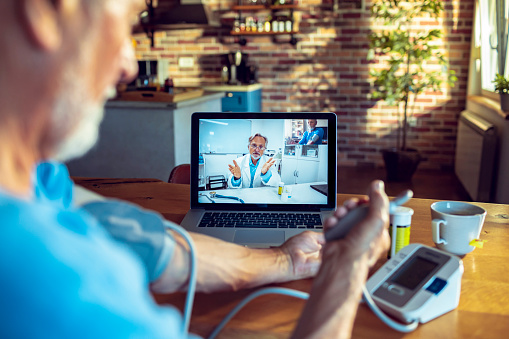
Telemedicine – the provision of long-distance clinical healthcare, harnessing readily accessible health-related information and telecommunications technologies,[1] has seen a rather dramatic change over the course of the COVID-19 pandemic. In fact, it is one of the most tangible areas where the pandemic, which typically carries negative connotations, has had a positive impact.
Telemedicine has been around for quite some time, enjoying varying levels of acceptance and implementation, before COVID-19 has been introduced into our lives (in the U.S., for instance, its use had been quite minimal prior to COVID-19).[2] The virus, has been a major catalyst for the adoption of this already existing, skeptically-treated technology (due to various concerns related to autonomy, privacy, and physician-patient relationship).
This novel uptake of Telemedicine, modifies and challenges traditional healthcare delivery and consumption; changing in particular (even if temporarily), the nature of patient-physician relationship or interaction. The now wider implementation of Telemedicine, also has a professional-culture impact on the medical profession as such, and on medical practitioners’ self-determination and perception of their mission. In terms of a social impact, routinely embracing remote medicine is in fact aligned with society accustoming itself to remote, virtual consumption of almost anything (from goods and services, to education, leisure activities, and personal connections). In terms of the technology itself, Telemedicine has been contributing to the minimization of social gaps and inequalities, to some extent. Finally, the health tech industry has been booming in the face of a pandemic of such proportions.
This time of pandemic has seen the evolvement of Telemedicine’s prevalence: moving from relative rarity, to routine care practice. Since the advent of the pandemic, health care providers have experienced a significant shift towards the use of telemedicine for remote patient diagnosis, monitoring and treatment, including telepsychology.[3] These have been conducted through virtual e-consultations, and routine follow-up using home testing, namely: various kits and applications for self-testing and self-monitoring, communicating data back to the physician. This shift, is expected to revolutionize the health care industry. According to some reports, telehealth visits increased 300-fold during the months of March and April 2020, in comparison to the previous year, with adoption of telemedicine being consistent across adult age groups.[4]
Enabling, or facilitating the embrace of such change, was the removal of various financial and legal obstacles, such as: the relaxation of privacy protection rules in the U.S, and similarly – across Europe; introduction of various reimbursement models (e.g., in the U.S. – the updated provision of insurance coverage for remote medicine, to include virtual visits as well as video-based virtual tests[5]), and increased government funding for novel telehealth initiatives.[6]
In an attempt to characterize the evolution that Telemedicine – as an alternative means for healthcare delivery – has both gone through and inspired under the unusual circumstances of the present pandemic, we have identified elements of transition within these following features:
Namely, acceptance: shifting from technological skepticism voiced by medical ethics traditionalists and others (some even dubbing it a ‘disruptive innovation’[7]), to enthusiastic embrace by keen adopters. In fact, this fresh positive attitude towards Telemedicine, may have even gone beyond that of enthusiasm, to perceiving the technology as an object of desert or entitlement for anyone seeking healthcare. This could seemingly go as far as invoking a right to ‘digital-first’ primary care.
Prompted by the aforesaid change in attitude, the once modestly-consumed healthcare technology, aimed mainly for treating and monitoring remote rural populations, has seen a considerable surge in demand during the COVID-19 pandemic.[8] The rising demand for Telemedicine services, due to the restrictive circumstances of the pandemic (e.g., high contagiousness, self-isolation, and quarantine), is complemented by a change in the optionality of digital services during such a time. In other words, we can similarly observe a shift from digital consumption (of Telemedicine services) by choice, to digital consumption by default.
As for the nature of individual privacy concerns in the context of Telemedicine, it seems that we have somewhat moved from medical confidentiality as a focal point of contention (typical to pre-COVID Telemedicine critique), to discussions about the personal privacy, in its more intimate sense, of hospitalized and quarantined patients being continuously monitored through Telemedicine technologies. (Invoking, in turn, a paternalistic argument holding that one’s right to health, coupled with public health interests, occasionally trump the right to personal privacy.)
In terms of scope: it has been expanded to include not only individual privacy concerns, but also concerns pertaining to population health data, as Telemedicine’s usage has been extended to treat larger portions of the population, thereby gathering masses of health data for primary (clinical) and secondary (mainly, research) uses.
Also, as mentioned above, the better enablement of Telemedicine consumption has required, among other things, the relaxation of privacy protection rules. In the U.S., penalties for using HIPAA-noncompliant private communications technologies, were suspended,[9] thus facilitating the provision of Telemedicine services, by allowing physicians to communicate with patients, while being unrestricted to private settings (such as clinic or office), and using ‘non-public facing’ remote communication product (e.g., Apple FaceTime, Google Hangouts video, WhatsApp video chat, Zoom, typically employing end-to-end encryption).
Originally designed for treating remote populations, the dire circumstances society and the healthcare system are facing due to the pandemic have brought on geographic indifference, essentially allowing the use of Telemedicine to treat patients anywhere.[10] This shift may be better described as moving from a goal of promoting social justice by bringing good quality medicine to rural inhabitants, to one seeking to promote public health and safety in general.
A novel function of Telemedicine, created by the circumstances of the pandemic and perhaps somewhat exceeding its original purpose, is that of a patient personal communication tool. Its instrumental value is not limited to enabling quarantined patients to communicate with family (in addition to communication with medical staff), but extends to allowing them, in tragic circumstances, to realize their right to say goodbye to their loved ones.
Another (originally unforeseen) departure from Telemedicine’s original design, brought on by the COVID pandemic, is that of enabling not only quarantined patients’ access to healthcare, but also for quarantined physicians to deliver it from their home settings. This allows them to participate in the decision-making process regarding their patients, and share some of the overload experienced by on-site physicians.[11]
In terms of the essentiality of the technology, Telemedicine has shifted from its elective status as a personal healthcare service, to being a sine qua non public health tool.
Telemedicine’s original, rather modest instrumental value, as one benefitting individual patients in distant communities, has turned into a tool of a societal benefit. Telemedicine’s COVID-19-specific advantages and benefits include the following (non-exhaustive) list:
The rising demand for Telemedicine, increased, in turn, professional overload. Once limitedly available to remote patients, the now unlimited availability of e-consultations – appears to increase medical workload for some healthcare providers.
Telemedicine, however, given its inherent limits, may serve as an imperfect substitute to traditional healthcare delivery, at least for some types of patients or areas of medicine, such as mental healthcare and physiotherapy. The personal interaction remains irreplaceable to a significant extent, in an intimate, delicately interwoven relationship between patient and therapist, such as in the former.[13] The physical touch is indispensable for evaluation, diagnosis and treatment, such as in the latter. Face-to-face consultation is defined by the WMA Statement on the Ethics of Telemedicine[14] as the gold standard of clinical care. The very idea of Telemedicine is, however, one that denies face-to-face healthcare, replacing it with a remote interaction via a virtual medical service. Consequently, the following sentiments, typically associated with a physician-patient relationship, may be lost in the transition to technology: trust, empathy, and intimacy, as well as the clinical goal of patient’s compliance.[15]
The nature of remote consultations is also inherently challenging for new physician-patient relationships, as it is not quite constructive for trust building. Additionally, it does not allow for a full, physical examination, or testing, to take place (irrespective of being well-acquainted with the patient, or not). Given the latter, Telemedicine is also an inappropriate instrument for close patient monitoring, where needed. It has also been argued that in terms of clinical efficiency, Telemedicine virtual visits are less focused and more time-consuming (lacking traditional on-site pre-work).[16]
Lastly, although originally intended to reduce socioeconomic gaps to a certain extent, Telemedicine’s reliance on technology (phones, computers, internet infrastructure, etc.), and its requirement of a fair level of digital literacy, may end up creating new barriers to healthcare access, thereby inadvertently enhancing social and racial inequality.[17]
Another seemingly trivial difficulty, but significant nonetheless, is one hinging on the personal circumstances of individuals seeking medical advice or treatment via Telemedicine, but lacking a ‘safe space’ from which they can privately and discreetly connect with their physician.
While admittedly, most of these cited shortcomings are not unique to Telemedicine in the narrow context of the COVID-19 pandemic, some of them may certainly be exacerbated by its associated circumstances, namely, quarantine and infection risk, consequently resigning patients to this presently irreplaceable healthcare route.
To sum, despite COVID-19’s wide-reaching implications for Telemedicine, extending to the point of the latter potentially becoming the new standard of care in some areas, it is difficult to accurately predict whether this medical trend will hold. While some current reports indicate that demand for virtual visits are plunging,[18] other estimates forecast the dramatic rise in the demand for telehealth technology, to persist over the next several years.[19] One can only assume that convenience through innovation will triumph to a certain extent, alongside the seemingly irreplaceable preference for (complementary) face-to-face physician-patient relationship/connection.
[1] https://www.hhs.gov/sites/default/files/telehealth-faqs-508.pdf; https://ilr.law.uiowa.edu/print/volume-99-issue-2/legislating-for-a-new-age-in-medicine-defining-the-telemedicine-standard-of-care-to-improve-healthcare-in-iowanew-article/.
[2] G. Weigel, A. Ramaswamy, L. Sobel, A. Salganicoff, J. Cubanski, and M. Freed, “Opportunities and Barriers for Telemedicine in the U.S. During the COVID-19 Emergency and Beyond”, Kff; https://www.kff.org/womens-health-policy/issue-brief/opportunities-and-barriers-for-telemedicine-in-the-u-s-during-the-covid-19-emergency-and-beyond/
[3] https://www.apa.org/monitor/2012/03/virtual
[4] Epic Health Research Network, “Expansion of Telehealth During COVID-19 Pandemic”, Ehrn.org (5 May 2020); https://ehrn.org/articles/expansion-of-telehealth-during-covid-19-pandemic
[5] Medicare Telemedicine Health Care Provider Fact Sheet, Cms.Gov; https://www.cms.gov/newsroom/fact-sheets/medicare-telemedicine-health-care-provider-fact-sheet
[6] N. Turner Lee, J. Karsten, and J. Roberts, “Removing regulatory barriers to telehealth before and after COVID-19”, Brookings.edu (May 6, 2020); https://www.brookings.edu/wp-content/uploads/2020/05/Removing-barriers-to-telehealth-before-and-after-COVID-19_PDF.pdf; Vital Signs: Digital Health Law Update, “Digital Health Dealmaking: Challenges and Opportunities”, Jdsupra (July 21, 2020); https://www.jdsupra.com/legalnews/vital-signs-digital-health-law-update-24098/.
[7] P. Yellowlees et al., “Disruptive Innovation: The Future of Healthcare?” 17(3) Telemedicine and e-Health, 231 (2011); https://www.researchgate.net/publication/50248824_Disruptive_Innovation_The_Future_of_Healthcare
[8] Leah Rosenbaum, “The Coronavirus Has Created A Surge of Telemedicine Demand. GoodRx Now Lets Consumers Compare Services”, Forbes (March 26, 2020); https://www.forbes.com/sites/leahrosenbaum/2020/03/26/the-coronavirus-has-created-a-surge-of-telemedicine-demand-goodrx-now-lets-consumers-compare-services/?sh=e97a1ff47f50
[9] FAQs on Telehealth and HIPAA during the COVID-19 nationwide public health emergency, Hhs.Gov https://www.hhs.gov/sites/default/files/telehealth-faqs-508.pdf
[10] See, in the U.S. – the Coronavirus Preparedness and Response Supplemental Appropriations Act: (Sec. 102) “This section allow HHS to temporarily waive certain Medicare restrictions and requirements regarding telehealth services during the coronavirus public health emergency”; https://www.congress.gov/bill/116th-congress/house-bill/6074.
[11] J. E. Hollander, and B. G. Carr, “Virtually Perfect? Telemedicine for Covid-19”, n. engl. j. med 382;18, 1679 (April 30, 2020).
[12] In Israel, an extensive such pilot was recently initiated by Magen David Adom – the Israeli Red Cross organization, with the cooperation of most of Israel’s HMO’s (health maintenance organizations).
[13] Arguably, while Telemedicine serves as a useful tool for sustaining therapist-patient interactions during a time of pandemic, it is not a panacea for people with mental health issues, requiring a personal, non-virtual connection with a professional therapist.
[14] https://www.wma.net/policies-post/wma-statement-on-the-ethics-of-telemedicine/
[15] https://www.ama-assn.org/practice-management/digital/help-patients-adjust-telehealth-remembering-human-touch; “telemedicine cannot yet, and most probably never will, entirely replace the benefits of being physically in the same room as your healthcare professional.” [Genetic Alliance UK] https://covid-19.geneticalliance.org.uk/wp-content/uploads/2020/07/Covid-19-Rare-Reality.pdf.
[16] A suggested solution to this shortcoming of Telemedicine, has been the soliciting of additional pre-visit information from patients through pre-visit surveys. See, G. Kriegel, S. Bell, T. Delbanco, and J. Walker, “Covid-19 as Innovation Accelerator: Cogenerating Telemedicine Visit Notes with Patients”, Nejm Catalyst (May 12, 2020); https://www.ncbi.nlm.nih.gov/pmc/articles/PMC7371295/.
[17] See WMA Statement on The Ethics of Telemedicine; https://www.wma.net/policies-post/wma-statement-on-the-ethics-of-telemedicine/;
[18] C. Ross,”Telehealth grew wildly popular amid Covid-19. Now visits are plunging, forcing providers to recalibrate”, Stat (September 1, 2020); https://www.statnews.com/2020/09/01/telehealth-visits-decline-covid19-hospitals/
[19] “Explosion in telehealth market due to COVID-19”, Health Europa (20th May 2020); https://www.healtheuropa.eu/explosion-in-telehealth-market-due-to-covid-19/100127/.
Privacy Protection for Smart Mobility Organizations in the Digital Age
On September 16, 2020 the Israeli Privacy Protection Authority (IPPA) published a new Guide -“Privacy Protection for Smart Mobility Organizations in the Digital Age”
Herein is a summary of the guide’s content.
_____________________________________________________________________
Mobility Organizations are defined as entities that provide mobility infrastructure, public mobility services, additional services to the mobility ecosystem, start-ups in the smart mobility vertical and operators of mobility vehicles in the city space.
Preamble
In 2017, the Israeli government passed the Government Decision 2316, aiming to promote Israel’s global leadership in this sector through 2 vectors: 1/ promoting and developing the Israeli industry and 2/ promoting solutions to mobility challenges. The main entity in the government activity in this space is the Ministry of Transportation (MoT) that is both directly in charge of mobility services and is active in the ecosystem of the private industry.
A visible trend in this regulatory space is that regulators are moving from being operators to being active enablers, promoting development of new solutions by the non-governmental entities. This is exemplified by the fact that Ministries no longer create their own databases of mobility data, but they promote different actors in the market to establish and manage these, while transferring the responsibility for the user’s privacy to them.
MoT is acting for the inclusion of technology and innovation in both infrastructure and vehicles. Collecting and sharing data are crucial to planning, monitoring and market development, for the “Mass Mobility as a service” revolution in Israel. Data is required for policy makers in developing infrastructure, as well as to developers of applications for mobility.
The IPPA states that this raises significant ethical and legal challenges to people’s privacy. The guide is aimed at clarifying ways of achieving the right balance in this space.
Chapter 1: Smart Mobility Ecosystem
In this chapter the guide lists the variety of participants in the mobility ecosystem: public sector; vehicle services; infrastructure; business-technology including tech giants like Google and Facebook; public and shared mobility.
The guide lists major technologies of importance in this ecosystem: 5G Cellular networks, Big Data analytics and Internet of Things.
The guide also lists major developments in the ecosystem: Mobility as a Service which includes Car Sharing, Ride Sharing, Carpooling, Ride Hailing; P2P decentralized on demand services; Last Mile solutions including Micro Mobility; ACES (Autonomous, Connected, Electric, Shared); Shared Data Hubs; Traffic Management and Control Optimization Systems.
Chapter 2: Includes general information about the IPPA
Chapter 3: Privacy Challenges in Smart Mobility
The guide describes that a user will be subject to constant surveillance by cameras and sensors connected to control centers. It will be possible to analyze the data, profile, learn preferences and statistics of specific people and the public in general. Though users will be sharing data for better service and personalized service, their privacy will be infringed upon.
Potential privacy challenges include:
1. Preventing the expansion of the data use purposes
2. Collection of excessive data
3. Data Security
4. Targeted advertising
5. Privacy regulation restricting innovation
6. Privacy by Design Implementation
7. Implementation of privacy requirements in procurement contracts and tenders
8. Abundance of entities involved in data sharing
9. Lack of sufficient knowledge of privacy protection methodologies and implementation in organizations
August 2019 Survey Findings:
1. 62% of surveyed users are very concerned about privacy protection when using mobility applications and sites
2. Over 60% of surveyed users think that privacy is not protected well enough and mobility organizations should seek consent from them for data processing
3. 85% of users are worried and 84% don’t trust mobility organizations
4. 1/3 of users don’t wish to share personal data for targeted services and over 40% partially agree to share
5. Over 50% of smart mobility services believe there is danger of personal data breach. A 1/3 believe there is danger of breach of personal habits and preferences, payment details or location data
6. 17% are worried of harassment, extortion or harm as a result of the improper use of personal data
7. The vast majority are interested in advice on better protecting their data and think the government should provide them with that
Chapter 4: Privacy Challenges in Smart Mobility
Describes general duties of all controllers and processors according to Israeli Privacy protection law and regulations, specifically describing the Data Security Regulations.
Chapter 5: Principles of implementing new technologies
Accountability – It’s recommended a mobility organization adopts accountability measures that will support its commitment to minimizing the consequences of technology on users’ privacy. The guide mentions this is mandatory in other jurisdictions, for example when subject to the GDPR.
It’s recommended to appoint a responsible senior manager of a privacy protection program. It can be a Data Protection Officer if the organization has one, but not the Chief Information Security Officer, which has different responsibilities. It is also optional to appoint a Privacy steering committee or senior staff team.
It’s recommended to conduct a Privacy Impact Assessment and adopt Privacy by Design principles when designing and implementing personal data processing activities.
Ex. Is a toll road fee charging system based on face recognition or body heat to conduct passengers count for statistical purposes.
It’s required by law to be transparent and give notice to data subjects.
Contracts and tenders for outsourcing partners must include detailed provisions for privacy protection (this is according to IPPA Guidelines on the use of Outsourcing Services for personal Data Processing ). It’s advisable that these decisions receive senior management attention.
Chapter 6: Focal Topics
1. Privacy Impact Assessment General Questionnaire (based on a previously published IPPA template).
2. General description of de-identification tools for Big Data governance.
3. General tools for using CCTV in a privacy considerate manner (based on previous IPPA guidelines).
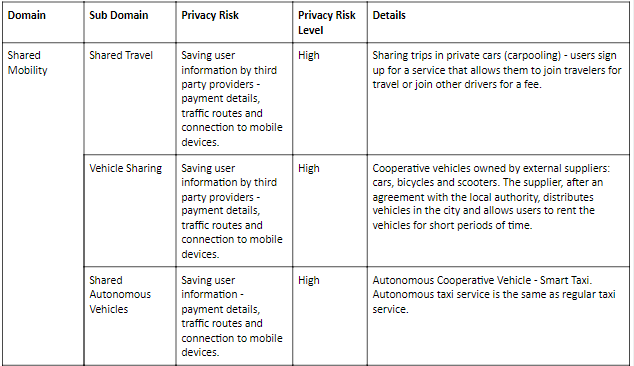
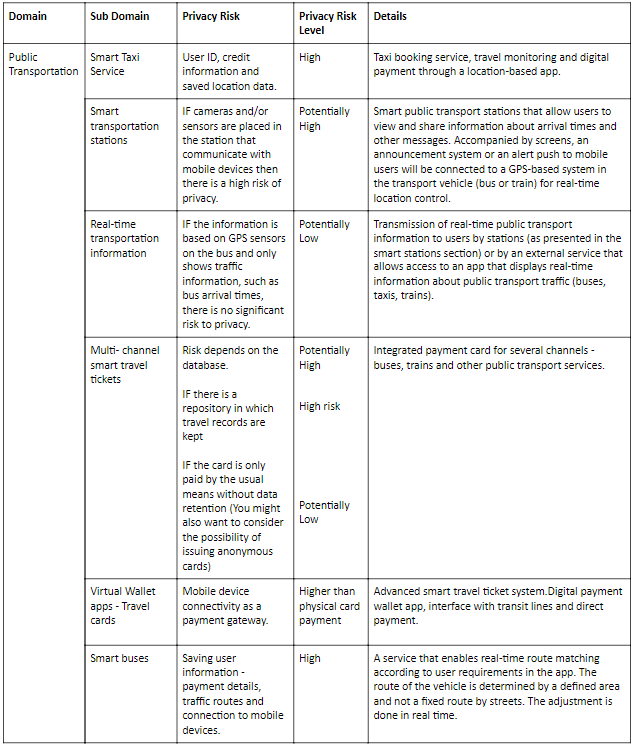
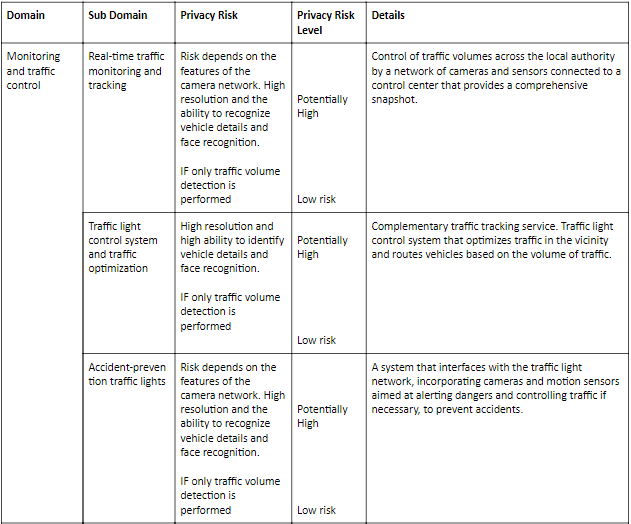
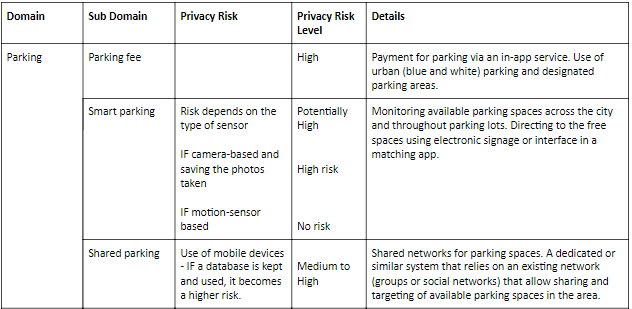
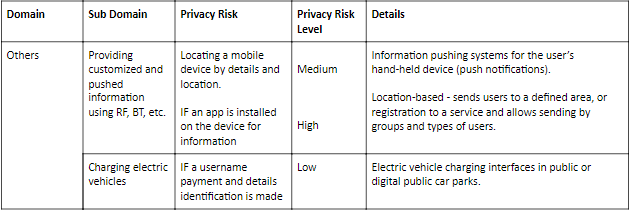
4. Mobility in the Municipal sphere – general description noting implementing smart mobility projects in municipalities entails privacy risks. Pages 36-37 provide a Table mapping privacy risk levels in smart mobility applications (see below).
5. Privacy in Payment Apps for public transportation –
The IPPA stresses that when it comes to public transportation, it is a public infrastructure and essential to citizen’s freedom of movement in the public space. It is especially important to populations with limited power such as minors, elderly, low income people or people with disabilities who do not own cars. Therefore, using apps as payment methods in this space is allowed, but should be done in a way that is reasonable, transparent and while balancing the purpose of using the personal data and the protection of privacy. Special emphasis should be given to the issue of consent and to the availability of an anonymous alternative. The chapter offers a detailed analysis of the privacy risks in this context and recommendations on mitigating them.
6. Description of data points and types in the smart mobility ecosystem.
Mapping of Privacy Risk Levels in Smart Mobility Applications

ITPI has recently contributed an opinion at the request of the Knesset Research and Information Center (RIC) to a review (in Hebrew) on the issue of making technology accessible to people with disabilities, put together by the former.
The RIC review was prepared for the Knesset’s Science and Technology Committee meeting, which took place on September 14, on the topic of: Narrowing the digital gap – making technology and technology-based services accessible to people with disabilities.
Various Government ministries and agencies, as well as civil society organisations, took part in the meeting. Access Israel‘s founder, Yuval Wagner, has delivered a presentation on the fundamental importance of making technological tools and services accessible to the community of people with disabilities. Digital Israel, the Innovation Authority and the Ministry of Economics have each presented their respective initiatives in promoting accessibility to technology for people with disabilities.
In addition to submitting a written comment, parts of which were cited in the RIC review, ITPI also supplied useful information gathered from various partners, locally and abroad.
הנגשת טכנולוגיות לאנשים עם מוגבלותהמכון הישראלי למדיניות טכנולוגיה התבקש על-יד מרכז המחקר והמידע (ממ”מ) של הכנסת לספק עמדתו ביחס למספר סוגיות העולות בהקשר של הנגשת טכנולוגיות לאנשים עם מוגבלות, לקראת ישיבת ועדת המדע והטכנולוגיה של הכנסת בעניין: צמצום הפער הדיגיטלי בישראל – הנגשת טכנולוגיות ושירותים מבוססי טכנולוגיה לאנשים עם מוגבלות, שהתכנסה ביום 14.9.20.
המכון הגיש את עמדתו, במסגרתה התייחס לשתי שאלות עיקריות:
האם יש לקדם מימוש חובת נגישות דיגיטלית של מוצרים טכנולוגיים חדשים כברירת מחדל – אם כן, כיצד; אם לא מדוע?
האם יש מקום להגדיר קריטריון של נגישות לאנשים עם מוגבלות כמדד בהחלטה על ביצוע רכש ממשלתי של תוכנות, או מוצרים דיגיטליים?
סקירת הממ”מ, שכותרתה “נגיש תחילה – הנגשת טכנולוגיות מראש”, וכוללת התייחסות לעמדת המכון (בעמ’ 13, 17), פורסמה לקראת הדיון בוועדה.
Accelerating Digital Transformation: What are the Required Building Blocks?And how does the government of Israel plan to make it happen?

The Digital Transformation of our society has been evolving for some years, yet deep structural changes requiring investment in physical infrastructures, innovation of policy and legislation and public-wide changing of old habits have been slow to follow. Recent worldwide events – product of a pandemic that spiraled a major economic challenge and requires social distancing – are a fierce trigger to the acceleration of these processes.
Governments may rely on various justifications to push for more services and activities to be offered fully online. Think of the amount of time spent in travel to and waiting for service at the bank, doctor’s clinic, getting a government ID or driver’s license. By providing more of these services online, citizens are spared the need to take time off work, employers can reduce staff, travel congestion can be reduced along with air pollution, people from communities distanced from urban centers can close the gap, the bureaucratic burden can be lowered thus decreasing the price of doing business and we can better answer the needs of an exponentially growing population. Additionally, in light of the current urgent need – less human contact on a daily basis in transportation and crowded offices reduces the spread of disease.
Four main sectors of services for the public and business sector should be focused on, in order to accelerate this transition into broader online societal services: Government, Finances, Health & Education.
In order for this to succeed in becoming a reality we need four supportive infrastructures:
First, we need more robust IT platforms like the ones cloud computing offers. This allows for the quick establishment of an environment that facilitates storage of data and applications, a multitude of software services and a managed and secure environment, that saves “time to market” and allows for more efficient use of resources for companies and governments.
Second, we need stronger communication channels deployed in full cover to service all communities, such as 5G and fiber-optic, that will provide us with more bandwidth and faster connection critical to sustain the growing needs of the digital servicing acceleration.
Third, and this one is much less advanced nowadays – we need digital identity management, at a government authentication level, with national and international interoperability. Why is that? Because one of the biggest challenges of the digital dimension is connecting our physical selves with our digital ones. Without an identity infrastructure there is no way to support and streamline activities that have legal standing such as renewing government documentation, transferring property registration, voting, attending court hearings, making complex and significant monetary transactions etc. Highly trusted validation and authentication of the person behind the digital device/service is essential to effective streamlining of a digital society. Among the major challenges for the creation of this infrastructure is dispensing digital identity credentials through a reliable process for each person, while creating an interoperable system through various services such as health, finance, education and government, keeping it secured and not too complicated for people to use daily.
And fourth, we need governments to actively drive this evolution by creating innovative enabling policies, laws and regulations; build incentives for private sector to join the evolution and support interoperability; support local governments in joining the transition so that municipal services are equally adapted to the digital dimension; collaborate with each other in creating international standards that allow for interoperability; and set an example by striding themselves in this direction by changing the way they offer services to the public.
These policies must address not only the benefits a digital evolution can offer, but also the potential unintended consequences. Challenges such as digital illiteracy, privacy, security, equality, accessibility need to be addressed in advance in order for the transition from physical services to digital ones to leave no one behind and benefit all.
Israel has several government plans and programs aimed at achieving this goal, that are expected to be promoted by a c. 112 million$ appropriation that has been tabled with the current budget bill (though postponed now due to coalition instability).
Its goals are:
1) Significant reduction in citizens’ physical attendance for service in government ministries and financial institutions
2) Significant reduction of the digital gap in local government services to citizens
3) Reducing bureaucracy and easing the burden on the citizen and business sector
4) Improving productivity in the economy through quality digital learning and training, especially investment in generating trained professionals for the high-tech industry
The program entails a number of key processes:
1) Establishment of alternative digital service channels to frontal service
2) Connecting local government and statutory corporations to central government digital services
3) Deep change of bureaucratic processes, re-engineering and regulatory change while adapting to the needs of the end-user in order to better cater to the challenge of diverse populations moving online
4) Promoting digital learning within diverse age groups and through different levels of training
5) Promoting digital identification infrastructure for the financial system
6) Expanding digital payment services and creating digital guarantees
7) Establishment of a National Digital Directorate in the Government Digital Office
The plan also includes a number of key infrastructure components:
1) “Citizen Personal Area” – on the Internet and mobile devices, offering citizens access to a variety of personal information managed by the government and provision of government services
2) National Digital Identity Management service, based on a government “Levels of Assurance” policy
3) National Digital Signature Service – based on PKI (Public Key Infrastructure) certificates
4) National Forms Service – including automatic entry of personal information and uploading of official documents in government possession
5) National Data Flows Infrastructure – Cloud based communication between the various public sector bodies
6) Online Courts and Online Dispute Resolution (ODR) system
Additionally, the suggested reforms include suggested regulation for the support of an open-banking initiative based on the EU standard PSD2, various incentives to promote the financial tech industry and an incentive regulation framework to encourage the deployment of nationwide FttH (Fiber Optic to the Home) infrastructures.
Other governments are also pursuing such policies. For example Open Banking initiatives are considered now also in India and the US. Digital government services have launched in Brazil.
Unfortunately for Israel, the current political saga is compromising this promising initiative, with the budget bill approval now being delayed by 120 days and the coalition being in a state of flux. Digital transformation is badly needed in these times of a major health crisis, and the major economic catastrophe that ensued. Hopefully, the government will get itself back on track sooner rather than later.
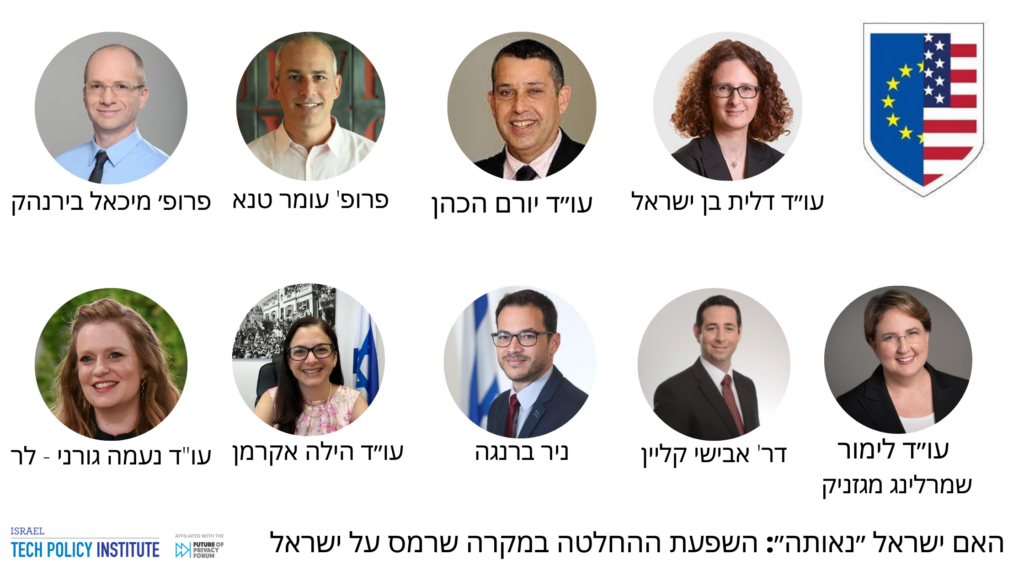
האם ישראל ״נאותה״: ההשפעה של החלטת בית הדין האירופי לצדק בפס״ד שרמס 2 על חברות בישראל
המכון הישראלי למדיניות טכנולוגיה, ערך דיון בהשלכות של התפתחויות אלו בתחום הגנת הפרטיות על ארגונים ישראליים, ועל מעמדה של מדינת ישראל כנאותה בתחום הגנת הפרטיות.
בדיון השתתפו –
פרופ’ עומר טנא, שותף מייסד המכון הישראלי למדיניות טכנולוגיה וסמנכ״ל ניהול ידע ב – IAPP, שהתייחס לתגובות בארה״ב לפסה״ד והעריך שלא נראה הסדר איחוד אירופי-ארה״ב שלישי.
עו״ד יורם הכהן, מנכ״ל איגוד האינטרנט, לשעבר ראש הרשות למשפט, טכנולוגיה ומידע (כיום הרשות להגנת הפרטיות), שיזם והוביל את בקשת ישראל להכרת הנאותות מצד האיחוד האירופי במשטר הגנת הפרטיות שלה, ותיאר את החשיבות של ההכרה עבור ישראל, היסודות עליהם היא ניתנה והערכתו את סיכויי שימורה.
פרופ׳ מיכאל בירנהק, פרופ׳ מן המניין וסגן דיקן למחקר, הפקולטה למשפטים, אוניברסיטת תל אביב, שכתב את חוות הדעת עבור נציבות האיחוד האירופי בבחינת ההכרה בנאותות ישראל, שהתייחס להתחייבויות שנתנה ישראל לנציבות בעת הענקת ההכרה שלא קוימו, ומה נדרש עוד על מנת להגן על ההכרה כיום, לאחר ה – GDPR והחלטת שרמס 2.
עו״ד דלית בן ישראל, מנהלת תחום IT ופרטיות ושותפה במשרד נשיץ ברנדס אמיר ושות’, המייעצת לחברות ישראליות וזרות שעובדות עם ובישראל ופירטה מה צריכה לעשות עכשיו חברה שהסתמכה על מגן הפרטיות או על התניות החוזיות בהעברות מידע על אירופאים לישראל ובהעברות מידע על ישראלים לארה״ב.
ד״ר אבישי קליין, קצין הגנת הפרטיות בחברת אמדוקס, מרצה לדיני סייבר ופרטיות, שתיאר את השפעת ההחלטה על חברת אמדוקס ושיתף בתהליך קבלת ההחלטות אצלם בנושא העברות מידע שקשורות לעובדים בארגון בינלאומי וללקוחות וספקים.
מר ניר ברנגה, מנהל מחלקת סחר בשירותים והשקעות, אגף מדיניות סחר והסכמים בינלאומיים, משרד הכלכלה, העוסק בשם ישראל במו״מ על הסכמי סחר דיגיטלי, והתייחס להחלטת האיחוד האירופי בהקשר הגיאופוליטי הרחב ולנושא לוקליזציה של מידע.
עו״ד הילה אקרמן, ראש אשכול משפט בין-לאומי כלכלי, המחלקה למשפט בין-לאומי, ייעוץ וחקיקה, משרד המשפטים, שעוסקת ביחסי ישראל והאיחוד האירופי ושותפה לניהול הליך הבדיקה של האיחוד האירופי את עמידתה של ישראל בדרישות, לצורך הכרה במשטר הגנת הפרטיות שלה כנאות, והתייחסה להחלטה בעניין שרמס 2 והשפעתה על תהליך הבחינה של ההכרה בנאותות ישראל.
עו״ד נעמה גורני-לר, ממונה (משפט וטכנולוגיה), הרשות להגנת הפרטיות, משרד המשפטים, שהתייחסה ליוזמות החקיקה לתיקון חוק הגנת הפרטיות והתאמתו לסטנדרט הבינלאומי ולפעילות הרשות על מנת לתמוך במאמצי שימור ההכרה בישראל.
עו״ד עמית אשכנזי, היועץ המשפטי, מערך הסייבר הלאומי, לשעבר היועץ המשפטי, הרשות למשפט טכנולוגיה ומידע (כיום הרשות להגנת הפרטיות) ששיתף בכמה נקודות מנסיונו כיועמ״ש של גוף ציבורי.
את הדיון ניהלה והנחתה מנהלת המכון, עו״ד לימור שמרלינג מגזניק.
רקע
ב-16 ביולי בית הדין לצדק של האיחוד האירופי (CJEU) פסל את ההסדר שאפשר העברות מידע אישי מאירופה לארה״ב, ״מגן הפרטיות״ (״Privacy Shield״), והטיל ספק בתוקפו של בסיס משפטי אחר, התניות החוזיות הסטנדרטיות – ״Standard Contractual Clauses (SCC)״, המשמש להעברות מידע מאירופה למדינות רבות בעולם (Data Protection Commissioner v.Facebook Ireland and Maximillian Schrems, ״ פס״ד שרמס 2״). הנימוק המרכזי: החשש מפני גישה לא מבוקרת של רשויות ביטחון אמריקאיות למידע אישי של תושבי האיחוד האירופי, שהועבר לארה״ב במסגרת פעילות מסחרית.
ישנן נקודות מבט מגוונות לדיון, העוסק בעקרון היסוד של הגנת הפרטיות במידע דיגיטלי, ונוגע גם לכלכלה הדיגיטלית, שזרימת מידע בין מדינות היא חלק בלתי נפרד ממנה. חשוב לבחון את החלטת בית הדין לצדק של האיחוד האירופי מכמה נקודות מבט: ערכית ומוסרית, משפטית, כלכלית ופוליטית.
מזה עשרות שנים שהדין של האיחוד האירופי אוסר על העברת מידע אישי אודות תושבי האיחוד למדינות אחרות, אלא באמצעות מנגנוני העברה שיבטיחו שהמידע ינוהל ברמת הגנה וכבוד לערך הפרטיות כמקובל בדין האיחוד.
מנגנוני העברה אלו כללו בין היתר: הסכם בין האיחוד לארה״ב (Safe Harbour ואחריו – Privacy Shield), לפיו חברות שיעמדו בתנאים הנדרשים לקיום עקרונות הגנת הפרטיות האירופיים, יצהירו על כך בפני רשות רגולציה אמריקאית ייעודית ויפוקחו על ידיה, יוכלו לקבל מידע על אירופאים מבלי שתהיה בכך הפרת חוק מצד מעבירי המידע. מסגרת נוספת היא הכרת נאותות למדינה שאינה חברת האיחוד, כנאותה ותואמת את מדיניות האיחוד בנושא הגנת הפרטיות (“Adequacy”), שבהינתנה ניתן להעביר אליה מידע. להכרה כזו זכתה ישראל לפני כ -10 שנים. זכו בה גם מדינות נוספות בעולם. עוד מנגנון הוא סעיפים חוזיים מוסכמים (״Standard Contractual Clauses (SCC)״), אשר בהינתן שהם כלולים בהסכם בין שני צדדים, כלומר הצד מקבל המידע מתחייב חוזית לנהל את המידע בהתאם לסטנדרט האיחוד האירופי, ניתן להעביר את המידע.
פסה״ד פסל את תקפות ההסדר הקיים, ״מגן הפרטיות״, להעברות מידע לארה״ב, באופן מיידי וללא תקופת היערכות, עצירה מיידית ומוחלטת, והדגיש שהרגולטורים האירופאיים מחוייבים לאכוף את האיסור להעביר מידע.
הסיבה: הבעייתיות בחקיקה האמריקאית בנושא מעקב על תקשורת דיגיטלית.
התוצאה המיידית של פסה״ד היא, כי יותר מ-5,300 חברות שהשתתפו בהסדר ״מגן הפרטיות״ נדרשות עתה למצוא פתרון אחר. אך להחלטה משמעויות מרחיקות לכת גם על הסדרים חוזיים להעברת מידע למדינות אחרות, וגם על ההחלטות שמכוחן הכיר האיחוד האירופי בעבר ב״נאותות״ ההגנה על הפרטיות במדינות נוספות (במסגרת מנגנון Adequacy), ובהן ישראל.
הנמקת בית הדין נעוצה בחקיקה האמריקאית בנושא מעקב על תקשורת דיגיטלית, המאפשרת גישתן של רשויות ביטחון למידע שעבר מאירופה לארה״ב לידי חברות פרטיות, ומייצרת מספר בעיות
ישראל זכתה להכרת הנאותות האירופית בשנת 2011. בשנת 2017, לאחר ההחלטה הראשונה של ביה״ד האירופי בעניין שרמס שביטלה הסכם דומה קודם עם ארה״ב (“Safe Harbour”), נציבות האיחוד האירופי הודיעה על פתיחה של בדיקה חוזרת של החלטת הנאותות של ישראל ושל כלל המדינות שהוכרו. מאז 2011, ישראל כמעט שלא תיקנה את דיני הגנת הפרטיות שלה, על מנת להתאימם למציאות הטכנולוגית-משפטית החדשה; גם לא לאחר שנכנסה לתוקף הרגולציה האירופית המקיפה – GDPR, ב-2018. לאחרונה אף התבהר, בהקשר של התמודדות המדינה עם מגפת הקורונה, כי שירות הביטחון הכללי של ישראל אוסף מזה שנים מידע מקיף מחברות הסלולר המאפשר לו לאכן תנועות של כל אדם, גם ללא צו שיפוטי.
תמצית התייחסויות הדוברים:
פרופ’ עומר טנא:
אני לא צופה הסדר שלישי בקרוב, בוודאי לא לפני הבחירות בארה״ב. מההיבט הפוליטי עמדת ממשל טראמפ שאם האיחוד האירופי יצר לעצמו בעיה שיפתור אותה בעצמו. מההיבט המשפטי, כדי להתגבר על קביעות פסה״ד יידרשו תיקוני חקיקה בנושא בטחון לאומי ואולי גם תיקוני חוקה בהקשר של זכות העמידה של נפגע מול בית המשפט. לא סביר שזה יקרה. פרקטית, 5,300 חברות היו בהסדר שבוטל מיד ללא תקופת היערכות, אך אני לא צופה שהרגולטורים האירופאיים ימהרו לאכוף עליהן איסור מידע על אירופאים לארה״ב. יש לומר שהפגמים שבית הדין מצא חלים על מדינות כל העולם, לרבות מדינות אירופה עצמן. המשך העברת מידע לארה״ב עדיין אפשרי על בסיס התניות החוזיות (SCC) וסעיף 49 GDPR. בית הדין חידד את חובת מעביר המידע לבצע בדיקת נאותות על דיני המדינה הנעברת ולהוסיף הגנות נוספות על המידע, למניעת גישת רשויות בטחון. הבדיקה לא מעשית ולא מפורט איזו הגנה נוספת תספק. נקודה חשובה נוספת היא, שרואים פה טרנד של לוקליזציה של מידע שעשוי לחזק את התהליך של התפצלות המרחב הדיגיטלי לגושים: אמריקאי, סיני ואולי אירופי, וזו לא התפתחות חיובית.
עו״ד יורם הכהן:
הכרת הנאותות היתה ברכה למשק הישראלי. בזכות ההכרה חברות ישראליות יכלו להתמודד במכרזים באירופה למתן שירותים שכרוכים בשימוש במידע אישי. ההכרה גם עזרה מאד לקהילה האקדמית בהשתתפות ביוזמות של פרוייקט Horizon2020. מרכיבי הבדיקה כוללים את דיני הגנת הפרטיות במדינה הנבדקת וקיומה של רשות אכיפה עצמאית בעלת סמכויות. חוק הגנת הפרטיות הישראלי מבוסס על עקרונות אמנה 108 של מועצת אירופה והנחיות העברת המידע של OECD, כך שהיה קל להראות שלישראל בסיס חזק. בנוסף, חוסרים שהאירופאים בתפיסת המשפט הקונטיננטלי מצפים שיהיו כתובים בחוק בצורה מפורטת, הוכחנו שנוספו בזכות תקדימים שיפוטיים בשיטת המשפט המקובל שאצלנו. הדבר המשמעותי השני בבחינה היה להוכיח שרשות הגנת הפרטיות הישראלית שהוקמה אז היא עצמאית. מכיוון שהרשות, אז והיום, היא יחידה במשרד המשפטים הכפופה למנכ״ל משרד המשפטים, זה לא היה פשוט. כעת אני צופה כאן בעייה יותר גדולה, משום שכשמסתכלים על עצמאות רגולטורים היום, פרשות דיויד גילה ואורית פרקש, ואירועים שקרו סביב הרשות להגנת הפרטיות בשנה וחצי האחרונות, אלו יעיבו על היכולת לטעון לעצמאות הרשות בבחינה המחודשת.
פרופ׳ מיכאל בירנהק:
הבדיקה שערכתי עבור האיחוד האירופי כללה ניתוח משפטי ומחקר שטח. נשלחו שאלונים ל-100 גופים ציבוריים ופרטיים מתעשיות שונות בארץ. המודעות היתה מאד נמוכה, וכיום אני מעריך שחלה עלייה משמעותית בהכרה בחשיבות נושא הגנת הפרטיות בישראל. בשנים שחלפו נוספו עוד השלמות חשובות להגנת פרטיות במשפט הישראלי, למשל פס״ד איסקוב בבית הדין הארצי לעבודה בנושא פרטיות עובדים, פס״ד קאלנסווה בנושא מידע ביומטרי, פס״ד IDIבמחוזי ועוד. ממשלת ישראל הבטיחה תיקוני חקיקה לאיחוד האירופי בהתאם להמלצות ועדת שופמן מ-2007. בחלוף 10 לא קרה דבר. חסר בחוק הגנת הפרטיות דרישת מידתיות בשימוש במידע, מגבלת תכלית. כיום האיחוד האירופי מחויב לבדוק מחדש את כל החלטות האדקווסי (11), ובהן קנדה ניו זילנד ארגנטינה וישראל. נכון שכל עוד לא החליטו אחרת ההחלטה הקודמת נותרה בתוק, אך מי שמשווה את החוק הישראלי ל-GDPR ברור שישראל לא תואמת, גם בלי להיכנס לסוגיית מעקב איכוני השב״כ. אין בחוק הישראלי חזרה מפורשת מהסכמה, זכות להישכח, חובות תסקיר הגנת פרטיות, מינוי ממונה פרטיות, עיצוב לפרטיות. לישראל יש גם קושי פוליטי שנובע מיחסי האיחוד האירופי וישראל על רקע דברים אחרים. בעת הענקת ההכרה לישראל ברגע האחרון האירלנדים התנגדו מסיבות פוליטיות, מאחר שנטען שישראל עשתה שימוש בדרכונים אירים מזויפים. ההכרה האירופית בנאותות חשובה לנו קודם כל משום שהיא מעלה את רמת הגנת הפרטיות בישראל. היא גם חשובה לחברות, בעיקר בינוניות וקטנות, שאין להן משאבים להשקיע במנגנונים אחרים להסדרת העברת מידע. אני סבור שממשלת ישראל נכשלה במבחן התוצאה בקידום הנדרש על מנת להגן על ההכרה. הממשלה גם התנגדה לחשיפת המענה שהגישה עד כה לאיחוד האירופי ולשתף את הציבור והחברה האזרחית בתהליך הבחינה.
עו״ד דלית בן ישראל:
ההכרה בנאותות של ישראל לא נשללה בינתיים ולכן הסתמכות עליה בהעברה מאירופה לישראל, עדיין עומדת. הקושי עבור חברות ישראליות, בדומה לחברות אירופאיות רבות שמעבדות מידע אירופאי בישראל, אך משתמשות בתהליך גם בספקי שירותים מחוץ לישראל הוא בביטול מגן הפרטיות. פעמים רבות ההייטק הישראלי מכוון לארה״ב, וחברות ישראליות משתמשות בשירותי אירוח אמריקאים. נוכח ביטול מגן הפרטיות, הדבר מחייב לבחון את שרשרת האספקה על כל חוליותיה, לבדוק התקשרויות עם ספקי משנה שאינם מעבדים את המידע באופן מלא באירופֲה, לבחון האם יש העברות מידע לארה״ב ועל מה הן מבוססות. צריך לעקוב ולראות כעת איך יתנהגו רשויות הרגולציה האירופאיות מבחינת אכיפה.
בנוסף, קיימת גם סוגיית ייצוא מידע על ישראלים מישראל. התקנות הישראליות על הוצאת מידע על ישראלים החוצה דומות לדין האירופי. חברות ישראליות שמעבדות מידע ישראלי בארה״ב, צריכות לבדוק את המנגנונים. אחת החלופות, שחברות רבות מסתמכות עליה, היתה העברת מידע למדינה שמקבלת מידע מהאיחוד האירופי על פי אותם תנאי קבלה. אם עד היום חברות הסתמכו על העברות לארה״ב על בסיס מגן הפרטיות (היה עם זה קושי, אני לא המלצתי על כך), הן צריכות לבחון עצמן מחדש. גם הסכמים ותניות חוזיות יחייבו כעת בחינה נוספת והגנות נוספות. יש גם לזכור שבישראל יש רגולציה נוספת פרטנית של רגולטורים סקטוריאליים, כמו הבנקים והביטוח, שמתייחסת ליצוא מידע בעיקר במחשוב ענן והן מחמירות יותר מהרגולציה האירופית, ויש לבחון גם אותן.
ד״ר אבישי קליין:
באמדוקס אנחנו עוסקים בשני סוגי העברות מידע אישי: 1) בתוך הארגון. אמדוקס חברה בינלאומית שעובדת ב -80 מדינות. העברות המידע בקבוצה כוללות בין המדינות גם מקומות בעייתיים כמו רוסיה והודו. 2) מידע של לקוחות וספקים. כשה-GDPR יצא, שקלנו אם להסתמך על מגן הפרטיות או להסתמך בכל ההעברות על התניות החוזיות. לשמחתי הסתמכנו על התניות החוזיות. הבעיה הגדולה יותר שפסה״ד יצר פתח לרגולטורים לקבוע לגבי כל העברת מידע על בסיס תניות חוזיות שהיא יכולה להיות לא תקפה. עשינו מיפוי מהיר לראות מי מהקשורים אלינו נסמך על המגן להעברות מידע אירופאי, מצאנו מעט ואנחנו מעבירים אותם לתניות חוזיות. אנחנו שוקלים קריטריונים איך לעשות Assessment לפי פסה״ד כדי להעריך אם התניות החוזיות יהיו מספקות. לא מספיק להבין מה החוק הספציפי אומר לגבי מעקבים. יש עוד קריטריונים שצריך לקחת בחשבון לרבות האם המידע הוא רגיש ועד כמה הוא עשוי לעניין רשויות בטחון. יכול להיות שמידע על עובדים לא מעניין במיוחד ולכן אפשר להעריך שאין סיכוי גבוה לגישה על ידי רשויות מדינה וניתן להעביר את המידע, לעומת זאת מידע בתחום הטלקום מאד מעניין. קריטריון נוסף שאנחנו שוקלים הוא האם אנחנו שומרים את במדינה כלשהי באחסון קבוע, או שמדובר במשהו זמני ונקודתי למשל לצורך תמיכה מרחוק שנפתחת ונסגרת מהר. אני מזכיר שהספקים הגדולים אמזון, מייקרוסופט, כשחתמו על הסכמי GDPR בהסכמים הסטנדרטיים שלהם חתמו על תניות חוזיות. גם הם ידעו שייתכן שהמגן לא חזק. מי שמסתמך על ספקי ענן כאלו כנראה די מוגן. הבעיה המשמעותית היא הלוקליזציה של המידע והביזור של ההחלטות לרגולטורים מדינתיים. יקשה עלינו מאד להתאים את עצמנו לצרכי הלקוחות בכל מדינה באופן שונה. התקווה שלי שהרשויות באירופה יתעשתו ויבינו שהן צריכות לעבוד יחד ולשמור על מנגנון One Stop Shop באיחוד.
מר ניר ברנגה:
מעל 65% מהייצוא הישראלי הוא למדינות שיש לנו איתן הסכמי סחר. אנחנו מנהלים את מערך הסכמי הסחר של ישראל ומייצגים את ישראל בארגון הסחר העולמי (WTO) וה – OECD בנושאים אלו. מסורתית, הסחר הדיגיטלי נכלל בהסכמי סחר שירותים משנות ה-90. כיום רואים כבר מגמה של עיבוי הסכמים אלו ויצירת הסכמים ייעודיים. למשל, לאחרונה ראינו הסכם סחר דיגיטלי בין ארה״ב ליפן ובין צ׳ילה, ניו זילנד וסינגפור. מטרת ההסכמים למנוע חסמים רגולטוריים ולייצר וודאות משפטית ארוכת טווח לארגונים שרוצים לפעול לאורך זמן בשווקים גלובליים. מתנהלת כבר 3 שנים יוזמה מעניינת ב – WTO שמובילות אוסטרליה, סינגפור ויפן, בניסיון ליצור כללי סחר דיגיטלי גלובליים מולטילטרליים. הסכמים אלו יהיו מחייבים ויש כיום 85 חברות ביוזמה מבין חברות WTO ובהן ישראל. כשאנחנו ניגשים למו״מ אנחנו משקפים את המצב הרגולטורי הקיים בישראל, כדי שלא נאלץ להתחייב לדברים שאנחנו לא יכולים לעמוד בהם. הסכמי סחר נועדו להפריד בין העולם הכלכלי מסחרי והעולם הפוליטי. פסה״ד משקף מגמה חדשה ומדאיגה של עירוב נושאים פוליטיים, תפיסות עולם וסוגיות סחר. בהסכמי סחר עקרון בסיסי הוא שמדינה חופשיה להסדיר את הרגולציה שלה עצמאית, אך בנושא הגנת הפרטיות האיחוד האירופי אומר לנו ליצר רגולציה כמו שלהם. זה עשוי להיתפס כצעד של מלחמת סחר, באמצעות דרישות שיהיה קשה לעמוד בהן. בנוסף, כרגע יצוא שירותים קשורים למידע אישי מישראל לאירופה תלוי בעיקר בחקיקה הפנימית שלנו, אך אין לנו וודאות שהאיחוד האירופי לא ישנה את הכללים בעוד כמה שנים, ושוב נכנס לסחרור בדרישה להתאים את עצמנו. בנוסף, יש כאן תחושה של הכנסת חסמים במסווה של ערכים מוסריים ואידיאלים דמוקרטיים תוך השלכות כלכליות עצומות. העברת מידע ולוקליזציה תמיד הייתה אבן נגף בכל דיון מולטילטרלי וגם בילטרלי עם מדינות אחרות. כולם מבינים שלוקליזציה לא טובה לסחר חופשי ותפגע בגלובליזציה, אך הדרישות האירופיות המחמירות מייצרות דה פקטו חובת הקמת שרתים מקומית. במיוחד לחברות קטנות וסטארט אפים הדרישות האירופיות מחייבות אותם לקחת עלויות ועול. ישראל מדינה קטנה ומושפעת מאד ממה שקורה בין הגושים הגדולים. יש כאן הזדמנות לנצל את הכח של הזירה המולטילטרלית, לחבור למדינות דומות לנו ולגבש קואליציות, אולי עם מדינות שהכרת הנאותות בהן נבחנת כרגע. אנחנו מעוניינים לשמוע את צרכי התעשייה ועמדות החברה האזרחית בנושאים האלו ומזמינים את כולם לשוחח אתנו.
עו״ד הילה אקרמן:
ישראל הוכרה כנאותה כבר בשנת 2011 ועוד קודם התחלנו במשרד המשפטים לקדם את תחום הגנת המידע בישראל. כעת אנחנו בתהליך ה- review. זו פעם ראשונה שהנציבות מתמודדת עם תהליך כזה. הנציבות מגישה חוות דעת לפרלמנט, שם צפויה להתקיים הצבעה שאינה מחייבת את הנציבות. אך יש להניח שאם יהיו הערות, הדו”ח יחזור לנציבות להשלמות. ההחלטה הסופית מחייבת. עובדים על תהליך ה- review של ישראל צוות של ייעוץ וחקיקה בינלאומי, ייעוץ וחקיקה חוקתי, הרשות להגנת הפרטיות ומשרד החוץ. אנחנו בתהליך של הגשת מענים לאיחוד וקבלת שאלות נוספות. פסה״ד חשוב מאד, ואנחנו ומדינות אחרות לומדים אותו. הוא חשוב גם למדינות בעלות הכרה, וגם למדינות חדשות שיבקשו לקבל הכרה. צריך לזכור שפסה״ד לא מדבר על מדינות שכבר הוכרו, אלא על הסדרים קונקרטיים בין האיחוד לארה״ב, אך ברור שההערות השזורות בפסה״ד עשויות להשפיע עלינו ועל יתר המדינות הנבחנות.
אתייחס ל-3 נושאים:
ראשית, הרחבת התחולה של GDPR לגופי בטחון של מדינה שלישית. ככלל, ה – GDPR אינו חל על העברות מידע לצרכי בטחון לאומי ואכיפת חוק, אך פסה״ד קובע חלות על העברה בין מדינות על ידי גופים מסחריים פרטיים, שלאחריהמתאפשרת גישה של רשויות בטחון במדינה המקבלת. ביה”ד קובע שיש לבדוק נאותות של המדינה הנעברת בעת שימוש במנגנון התניות החוזיות, ושיש לשים לב להוראות המצויות ב – GDPR לצרכי הכרת נאותות. כלומר, בית הדין רואה בהעברת מידע בנתיב הנאותות כבטוחה יותר מאשר לפי תניות חוזיות. שנית, רמת ההגנה הנדרשת. ביה”ד קובע, שהיות שסעיפי הנאותות ונושא העברת המידע לפי תניות חוזיות נמצאים באותו פרק, רמת ההגנה מכוחם צריכה להיות שווה במהותה. ביה״ד מחדש כאן חידוש משמעותי, בהגדרתו את הצ׳רטר האירופי לזכויות אדם כמקור. זוהי למעשה החלה של חקיקה פנים אירופית כסטנדרט, על מדינות שאינן באיחוד האירופי. שלישית, זכות הגישה לסעד שיפוטי. ביה”ד קובע, כי חקיקה שתעמוד בסטנדרט האיחוד תכלול אפשרות לסעד משפטי לאנשים שפרטיותם נפגעה מפעולת רשויות הבטחון, כך שחקיקה שלא מקיימת זאת, נעדרת את ליבת הזכות להגנה משפטית. יש לאבחן את ישראל מארה״ב בנושא הגישה לערכאות. בישראל, הזכות לפרטיות מוכרת בחוק יסוד: חוק האדם וחירותו ולפיכך, הגישה לערכאה שיפוטית הופכת קלה, כולל למול רשויות בטחון. ראינו לאחרונה בסוגיית שימוש באיכון השב״כ למאבק בקורונה, שבית המשפט העליון לא היסס לקבוע קביעות נחרצות, ולדרוש שהממשלה תסדיר את השימוש בחקיקה ראשית. גם כנגד הסדר זה הוגשה עתירה.
צריך לזכור, שבית הדין בעצם מבקר כאן את הנציבות של האיחוד האירופי ומבטל פעמיים תוך שנים ספורות הסכמים של הנציבות ושולח אותה לעשות עבודה נוספת. ייתכן שתעוצב כאן מדיניות חדשה באיחוד.
עו״ד נעמה גורני-לר:
תזכיר צמצום חובת הרישום אכן מהווה סנונית ראשונה. הוא מתייחס, גם לצמצום הנטל של הרישום וגם לעדכון של הגדרות קיימות בחוק, כשהרוח הכללית היא הניסיון להתאים לרפורמות בעולם ובראשן ה – GDPR, במטרה לקדם את ההגנה על הפרטיות בישראל. אנחנו מתכננים להביא את תיקון החקיקה על סמכויות האכיפה (תיקון 13) בקרוב לכנסת, יחד עם שותפינו בייעוץ וחקיקה במשרד המשפטים. תיקון זה מרחיב את סמכות הרשות להטיל עיצומים כספיים בסכומים נכבדים ומחזק את סמכויות האכיפה הפליליות והמנהליות. אנחנו מקווים שבקרוב יעלה על שולחן הכנסת. זהו מהלך משלים יחד עם עדכון ההגדרות וצמצום הנטל הבירוקרטי בתזכיר הראשון. אנחנו מבקשים ליצור וודאות למשק הישראלי ולהגביר את האכיפה בתואם עם GDPR. בהמשך נרצה להביא תיקונים נדרשים נוספים, וליצור בחקיקה של פרקים – פרקים קודקס שלם שייתן מענה על צרכי עידן עיבוד המידע הנוכחי וההגנה על הפרטיות בו. הרשות גם פרסמה לאחרונה הנחיות רבות, בנושא הקורונה ובנושאים אחרים. כמו-כן הגשנו לראשונה חוות דעת מקצועית לוועדת חוץ ובטחון בכנסת בהקשר של איכוני השב״כ, ועמדתנו המקצועית כי יש חלופה אחרת פוגעת פחות בפרטיות והיא המגן 2.
עו״ד עמית אשכנזי:
ראשית, יש חוק בספרים ויש חוק בשטח, ולישראל יש חוק בשטח. שרמס נכשל בתביעה ייצוגית גדולה באירופה כשניסה לממש את הצלחותיו, ונענה שאין בדין האירופי אפשרות לתביעה ייצוגית בנושא פרטיות. לעומת זאת, בישראל תביעות ייצוגיות בנושאי פרטיות מנוהלות ומשפיעות על רמת הציות במשק. ככלל, ניהול הסיכונים בתחום הפרטיות בישראל בסדרי גודל, יותר משמעותי היום משהיה פעם, והפקידות האירופית יודעת להעריך ולהוקיר את זה.
שנית, כיועמ״שׁ שעוסק בפרטיות, יש לזכור את החשיבות של עקרון האחריותיות. שרמס 2 שולח יועצים משפטיים שחותמים על תניות חוזיות לעשות ניהול סיכונים, ולא תמיד התוצאה תהיה זהה. פעמים רבות מדובר במידע תמים, והחשש שמא מדינה זרה תיגע במידע, חלש. שלישית, אני חושב שהנציבות תרצה יותר הסדרי נאותות כי הם מחזקים את המותג האירופי כלפי מדינות אחרות. למרות האתגרים הרבים, יש תועלות בשימור קהילת המדינות המעריכות פרטיות ומגנות עליה, כמו ישראל, בוודאי כשמדינה כישראל יש לה קהילת הייטק, סייבר ו – AI ויש לה ערכים משותפים עם האיחוד האירופי, הרבה יותר ממדינות אחרות שהוזכרו כאן היום.
מצלמות זיהוי פנים ברשתות מזון וחנויות מסחר
אנו עדים לאחרונה לרצון הגובר של רשתות המזון וחנויות לעשות שימוש במצלמות זיהוי פנים על מנת לשמור ולהגן על הלקוחות במסגרת המאבק בנגיף הקורונה. הרגולטור ההולנדי מבהיר כי לפי הוראות תקנות הגנת המידע (GDPR) ארגונים יכולים לעשות שימוש בטכנולוגיה זו רק במקרים חריגים.
טכנולוגית זיהוי הפנים מבוססת על שימוש במצלמות במעגל סגור ועיבוד הצילומים באמצעות תוכנה לזיהוי פנים. התוכנה מאפשרת את השוואת הנתונים הביומטריים שנקלטים בצילום פניו של אדם לבסיס נתונים של תמונות בו כל תמונה מתויגת. לנוכח זאת, שימוש במצלמות בשילוב עם יכולת זיהוי פנים נחשב לעיבוד מידע ביומטרי.
תקנות הגנת המידע ככלל אוסרות על ארגון לעבד מידע ביומטרי באמצעים טכנולוגיים ככל שהמידע נוגע לתכונות פיזיות, פסיכולוגיות או התנהגותיות של אדם כאשר העיבוד נועד לצורך זיהוי ייחודי של אדם. עיבוד כזה מותר אם האדם נתן הסכמה מפורשת או אם קיים אינטרס ציבורי חיוני.
פאנל הרגולטורים האירופי להגנת מידע קבע לעומת זאת כי חנות יכולה לעשות שימוש במצלמות המזהות תכונות פיזיות של לקוחות כמו גיל ומין למטרות פרסום ובלבד שהעיבוד לא יוצר תבנית ביומטרית המאפשרת זיהוי של האדם. הפאנל גם קובע כי צילום מידע רפואי או פוליטי באופן אגבי כמו אדם הנדרש לכיסא גלגלים או משתתפים בהפגנה לא יחשב לעיבוד מידע רפואי או מידע על דעה פוליטית אלא אם מטרת הצילום הייתה להסיק קטגוריה מיוחדת זו של מידע. חנות המעוניינת להבחין בין לקוחות כדי לתת שירות מיוחד ללקוחות חשובים חייבת לקבל מראש את הסכמת כל הלקוחות לשימוש במצלמות זיהוי פנים אם לצורך כך עליה לזהות כל לקוח בעת כניסתו לחנות.
כניסה של אדם לסניף של רשת מזון איננה יכולה להיחשב הסכמה מפורשת לזיהוי הפנים שלו, וקשה עד בלתי אפשרי לבקש מראש הסכמה מפורשת לכך. חוק הגנת המידע ההולנדי קובע כי ניתן לעבד מידע ביומטרי אם זה חיוני למטרות אבטחה או אימות זיהוי. הרגולטור ההולנדי מדגיש כי עיבוד מידע ביומטרי לצורכי אבטחה במתקן גרעיני יכול להיחשב חיוני ומידתי. אולם בסופרמרקט לדעת הרגולטור במקרים רבים ניתן להשיג את אותה מטרה גם באמצעות שימוש במצלמות אבטחה רגילות ללא תוכנה לזיהוי פנים.
בבריטניה, חוק הגנת המידע קובע 23 מטרות שיחשבו אינטרס ציבורי חיוני. מניעה וגילוי פשיעה או הונאה והגנת הציבור נחשבים לאינטרס ציבורי חיוני המאפשר עיבוד מידע ביומטרי גם ללא הסכמה מפורשת. בדנמרק לעומת זאת, חוק הגנת המידע קובע כי ככל שמדובר בחברה פרטית הרשות להגנת המידע מוסמכת לבחון ולקבוע האם אכן מתקיים אינטרס ציבורי חיוני. כך לדוגמה התירה רשות הגנת המידע הדנית בפעם הראשונה לחברה פרטית לעשות שימוש במצלמות זיהוי פנים על מנת לאתר ולמנוע מאוהדים שנאסר עליהם להשתתף במשחקים, מלהיכנס לאצטדיון. לדעת הרשות הדנית מטרה זו נחשבת לאינטרס ציבורי חיוני.
בנוסף על החריג של אינטרס ציבורי חיוני המתיר לעבד מידע ביומטרי יש לקבוע האם מתקיים בסיס חוקי לעיבוד המידע. חברה פרטית יכולה לעשות שימוש בבסיס חוקי של אינטרס הלגיטימי בעיבוד מידע במצלמות זיהוי פנים. אינטרס לגיטימי חייב להיות חוקי ומידתי למטרת השימוש וכל זאת כאשר לא ניתן לעשות שימוש באמצעי שפגיעתו פחותה. כמו כן נדרש לידע את הלקוחות ולהקטין את הפגיעה על ידי מזעור המידע והגבלת השימוש.
בישראל אין איסור בחוק על שימוש במצלמות זיהוי פנים. באוקטובר 2012 פרסם רשם מאגרי המידע הנחיה מכח חוק הגנת הפרטיות על שימוש במצלמות אבטחה ומעקב ובמאגרי התמונות הנקלטות בהן. הרשם קובע כי עקרון בסיסי בחוק הגנת הפרטיות הוא שאין פוגעים בפרטיות של אדם ללא הסכמתו. בשל האיסור לפגוע בפרטיותו של אדם ללא הסכמתו, כאשר מוצבת מצלמת מעקב עם או בלי יכולת זיהוי פנים יש ליידע על כך באופן ברור על מנת לאפשר לאדם להימנע מהצילום, ובמקביל לייחס לאנשים המצולמים הסכמה משתמעת לאיסוף המידע על אודותם ולשימוש בו. הדרישות באשר למקום פרסום ההודעה לציבור, תוכנה של ההודעה ואופן הפרסום נגזרים מהגדרת המונח ׳הסכמה׳ בחוק הקובע שההסכמה תהיה מדעת.
הרשם קובע כי ארגון המבקש לעשות שימוש במצלמות זיהוי פנים נדרש לבצע תסקיר השפעה על פרטיות כדי לקבוע אם השימוש המבוקש מוצדק ומידתי. ככל שהתועלת מהשימוש בטכנולוגיה נמוכה יותר וישנן חלופות זמינות שפגיעתן פחותה, השימוש עשוי להיחשב ללא מדתי. על הארגון לבצע הנדסת פרטיות ביחס לתכונות למיקום ולהיקף הכיסוי של המצלמות, ולערוך וליישם מדיניות המפרטת את אופן הפעלת המצלמות. יש לציין שאיזון האינטרסים בתקופת מגפה עשוי להיות שונה למדי מאיזון האינטרסים כאשר נחזור לשגרה, אך ספק אם נוכל או נרצה לוותר על האמצעים ההופכים את חיינו לנוחים יותר אך גם פגיעים יותר.